Peng Wu
|
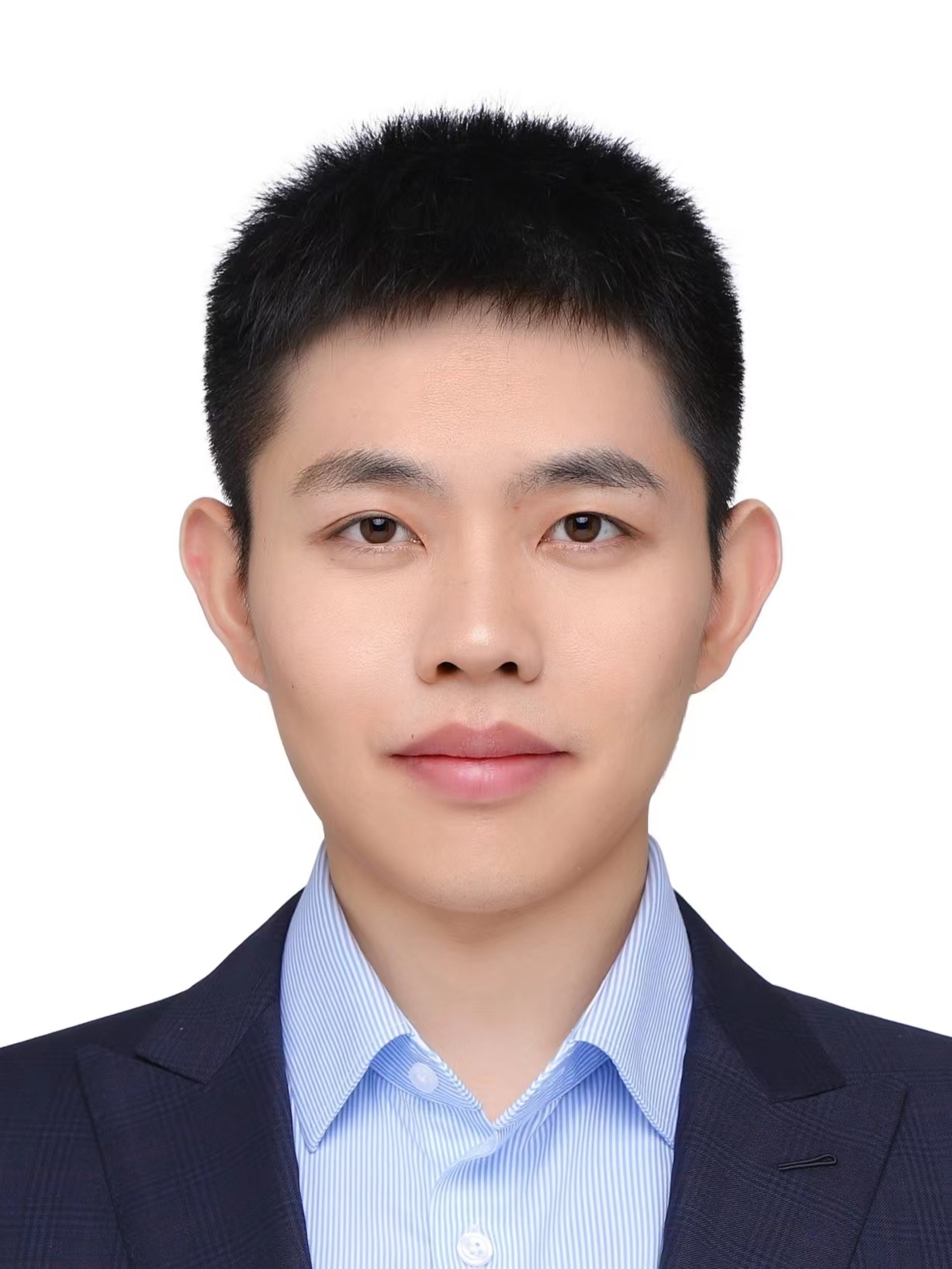
|

Biography
Research Interests
My research develops causal inference and machine learning methods for reliable decision making under counterfactual uncertainty. The research spans three interconnected directions:
Estimating causal effects: heterogeneous treatment effects, long-term and short-term treatment effects.
Characterizing counterfactual uncertainty: data fusion, quantifying individual risk (counterfactual harm), partial identification, sensitivity analysis.
Learning reliable decisions: trustworthy policy evaluation and policy learning.
Application scenarios: recommender system, medical decision-making
Publications
*Corresponding author, #contributed equallyWroking Papers
Jingyi Li, Peng Wu*, and Chengchun Shi. Counterfactually Safe Reinforcement Learning. arXiv:2605.25114 (2026+)
Qinwei Yang, Jingyi Li, Peng Wu*, and Shu Yang. Improving Treatment Effect Estimation in Trials through Adaptive Borrowing of External Controls. arXiv:2604.13973 (2026+)
Shanshan Luo, Peng Wu*, and Zhi Geng. Pseudo-strata learning via maximizing misclassification reward. arXiv:2505.05308 (2025+)
Featured Works
Peng Wu and Xiaojie Mao. The Promises of Multiple Experiments: Identifying Joint Distribution of Potential Outcomes. Journal of the Royal Statistical Society Series B: Statistical Methodology, 2026
Peng Wu, Peng Ding, Zhi Geng, and Yue Liu. Quantifying Individual Risk for Binary Outcomes. Journal of the Royal Statistical Society Series B: Statistical Methodology, 2026
Peng Wu, Shanshan Luo, and Zhi Geng. On the Comparative Analysis of Average Treatment Effects Estimation via Data Combination. Journal of the American Statistical Association (Theory and Methods), 2025, 120(552):2250–2261
Journal
Peng Wu and Linbo Wang. A Distributional Perspective on Pearl's Causal Hierarchy: From Marginal to Joint and Individualized Potential Outcomes. Statistical Learning and Data Science (SLADS), Special issue on "High-Dimensional Inference and Causal Inference", 2026
Peng Wu, Jile Chaoge, and Shu Yang. Adaptive Influence-Based Borrowing Framework for Improving Treatment Effect Estimation in RCTs Using External Controls. Statistics in Biopharmaceutical Research, Special issue on "Externally Controlled Trials: Tutorials, Reviews, and Practical Guidance" (2026)
Wenjie Hu, Xiao-Hua Zhou, and Peng Wu*. Identification and estimation of treatment effects on long-term outcomes in clinical trials with external observational data. Statistica Sinica, 2025, 35:959-980
Peng Wu, Zhiqiang Tan, Wenjie Hu, and Xiao-Hua Zhou. Model-Assisted Inference for Covariate-Specific Treatment Effects with High-dimensional Data. Statistica Sinica, 2024, 34:459-479
Peng Wu#, Shasha Han#, Xingwei Tong, and Runze Li. Propensity score regression for causal inference with treatment heterogeneity. Statistica Sinica, 2024, 34:747-769
Ye Tian, Peng Wu, and Zhiqiang Tan. Semi-supervised Regression Analysis with Model Misspecification and High-dimensional Data. Statistica Sinica, 2025
Peng Wu, Pengtao Zeng, Zhaoqing Tian, and Shoajie Wei. Matching-Based Nonparametric Estimation of Group Average Treatment Effects . Statistics in Medicine, 2026, 45(8-9): e70451.
Zhaoqing Tian and Peng Wu*. Semiparametric Efficient Inference for the Probability of Necessary and Sufficient Causation. Statistics in Medicine, 2025, 44(18-19):e70242
Conference
Xiaowei Shi, Cong Wang, and Peng Wu. From Prediction to Prescription: Adaptive Video Content Optimization under Evolving Recommendation Regimes. International Conference on Information Systems, 2026. (ICIS 2026)
Qinwei Yang, Jingyi Li, and Peng Wu*. Adaptive Data-Borrowing for Improving Treatment Effect Estimation using External Controls. NeurIPS 25
Peng Wu, Haoxuan Li, Chunyuan Zheng, Yan Zeng, Jiawei Chen, Yang Liu, Ruocheng Guo, and Kun Zhang. Learning Counterfactual Outcomes Under Rank Preservation. NeurIPS 25
Qinwei Yang, Xueqing Liu, Yan Zeng, Ruocheng Guo, Yang Liu, Peng Wu*. Learning the Optimal Policy for Balancing Multiple Short-Term and Long-Term Rewards. NeurIPS 24
Haoxuan Li, Chunyuan Zheng, Yanghao Xiao, Hao Wang, Fuli Feng, Xiangnan He, Zhi Geng, and Peng Wu*. Removing Hidden Confounding in Recommendation: A Unified Multi-Task Learning Approach. NeurIPS 23
Jinqiu Jin, Haoxuan Li, Fuli Feng, Sihao Ding, Peng Wu, and Xiangnan He. Fairly Recommending with Social Attributes: A Flexible and Controllable Optimization Approach. NeurIPS 23
Peng Wu, Ziyu Shen, Feng Xie, Zhongyao Wang , Chunchen Liu, and Yan Zeng. Policy Learning for Balancing Short-Term and Long-Term Rewards. ICML 24
Feng Xie, Zheng Li, Peng Wu, Yan Zeng, Chunchen Liu, and Zhi Geng. Local Causal Structure Learning in the Presence of Latent Variables. ICML 24
Haoxuan Li, Chunyuan Zheng, Shuyi Wang, Kunhan Wu, Eric Wang, Peng Wu, Zhi Geng, Xu Chen, and Xiao-Hua Zhou. Relaxing the Accurate Imputation Assumption in Doubly Robust Learning for Debiased Recommendation. ICML 24
Haoxuan Li, Yanghao Xiao, Chunyuan Zheng, Peng Wu*, and Peng Cui. Propensity Matters: Measuring and Enhancing Balancing for Recommendation. ICML 23
Haoxuan Li, Chunyuan Zheng, Yixiao Cao, Zhi Geng, Yue Liu*, and Peng Wu*. Trustworthy Policy Learning under the Counterfactual No-Harm Criterion. ICML 23
Jiayi Guo, Haoxuan Li, Tian Ye, and Peng Wu*. A Relative Error-Based Evaluation Framework of Heterogeneous Treatment Effect Estimators. ICLR 26
Haoxuan Li, Chunyuan Zheng, Sihao Ding, Peng Wu*, Zhi Geng, Fuli Feng, and Xiangnan He. Be Aware of the Neighborhood Effect: Modeling Selection Bias under Interference for Recommendation. ICLR 24
Haoxuan Li, Yanghao Xiao, Chunyuan Zheng, Peng Wu, Xu Chen, Zhi Geng, and Peng Cui. Adaptive Causal Balancing for Collaborative Filtering. ICLR 24
Haoxuan Li, Yan Lyu, Chunyuan Zheng, and Peng Wu*, TDR-CL: Targeted Doubly Robust Collaborative Learning for Debiased Recommendations. ICLR 23
Haoxuan Li, Chunyuan Zheng, and Peng Wu*, StableDR: Stabilized Doubly Robust Learning for Recommendation on Data Missing Not at Random. ICLR 23
Xueqing Liu, Qinwei Yang, Zhiyu Hao, and Peng Wu*, Offline Policy Enhancement and Transfer by Combining Experimental and External One-Sided Treatment Data. KDD 26
Weiqin Yang, Jiawei Chen, Shengjia Zhang, Peng Wu, Yuegang Sun, Yan Feng, Chun Chen, and Can Wang. Breaking the Top-K Barrier: Advancing Top-K Ranking Metrics Optimization in Recommender Systems. KDD 25
Haoxuan Li, Chunyuan Zheng, Peng Wu, Kun Kuang, Yue Liu, and Peng Cui. Who should be Given Incentives? Counterfactual Optimal Treatment Regimes Learning for Recommendation. KDD 23
Sihao Ding, Peng Wu*, Fuli Feng, Yitong Wang, Xiangnan He, Yong Liao, and Yongdong Zhang. Addressing Unmeasured Confounder for Recommendation with Sensitivity Analysis. KDD 22
Quanyu Dai, Haoxuan Li, Peng Wu*, Zhenhua Dong, Xiao-Hua Zhou*, Rui Zhang, Xiuqiang He, Rui Zhang, and Jie Sun. A Generalized Doubly Robust Learning Framework for Debiasing Post-Click Conversion Rate Prediction. KDD 22